

Managing Breathlessness in Persons with COVID-19
Managing Breathlessness in Persons with COVID-19

An Evidence Review of the Role of Opioids
Although most people with COVID-19 recover without needing specialist treatment, about one in six becomes seriously ill and develops difficulty breathing, most often due to pneumonia.
When the lungs become infected with coronavirus and filled with inflammatory material that inflames air sacs, the body’s ability to take on oxygen and get rid of carbon dioxide is reduced. This results in dyspnea, which is the subjective sensation of being unable to breathe.
Dyspnea varies in intensity, but when severe, it is one of the most uncomfortable symptoms that when left unrelieved can result in panic. Opioids, such as morphine, are effective at relieving dyspnea, but many physicians are reluctant to prescribe opioids for breathlessness except during the last days or weeks of life.
Our Quick Guide to Treating Dyspnea with Opioids provides a concise evidence review of how opioids relieve dyspnea, includes recommendations for starting doses and titration, describes the role of anxiolytics such as lorazepam and answers the question “do opioids hasten death?” (the answer is no).
Related Blog Posts

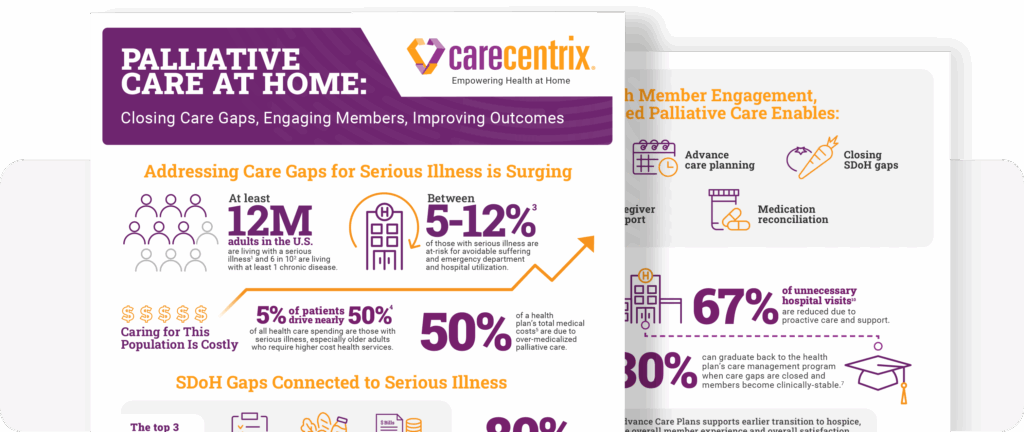
Palliative Care at Home: Closing Gaps, Engaging Members
Supporting members with serious illness can become costly. The need…
Family Caregivers: How Palliative Care Can Help
Facing a serious illness is overwhelming for patients, their family…

Moving Palliative Care from the Hospital to Home
Payors are constantly looking for ways to enhance the member…

Defining Vulnerable Populations in Healthcare
Defining Vulnerable Populations in Healthcare As providers, health plans, and…

4 Healthcare Trends that MA Plans Should Know in 2023
This year will be one marked by significant change and…

The Caregiving Crisis: How Health Plans Can Help
Over the course of my career caring for and developing…
